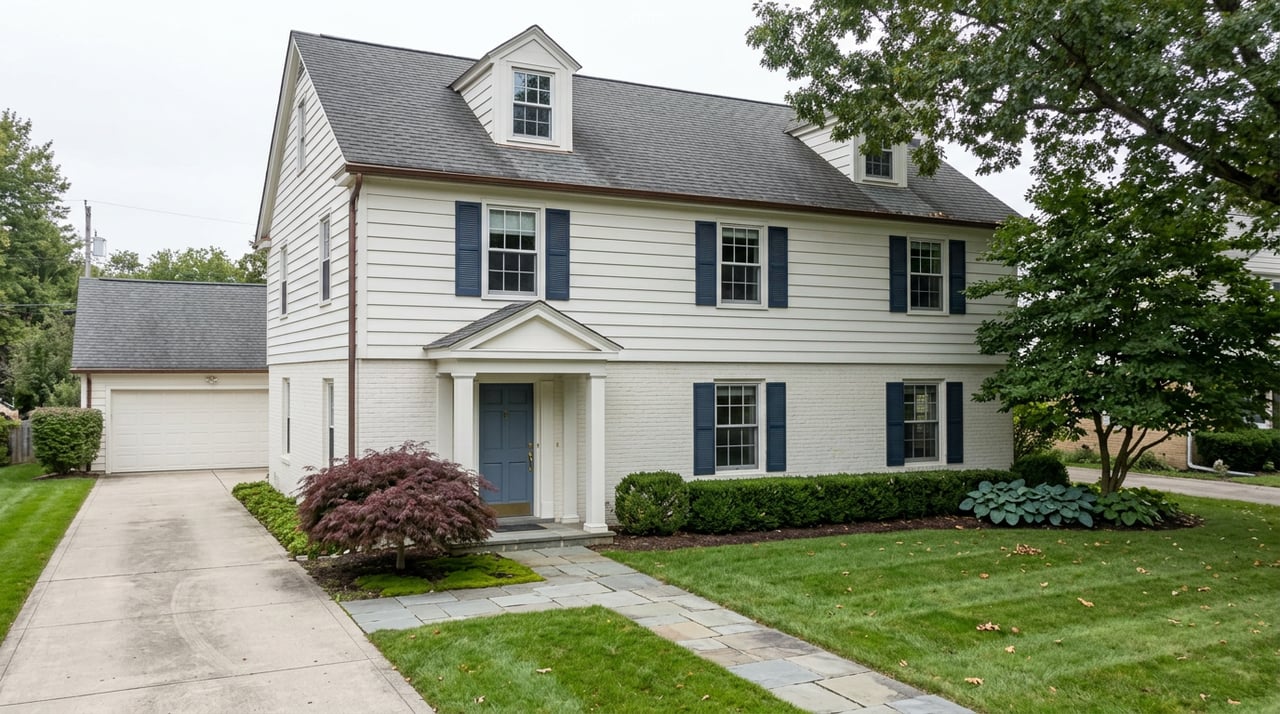
Wrentham's Outlet Mall Is Booming. Your Property Taxes Still Aren't Cheaper Than Franklin's.
In a Connect CRE report, Ashley Feldhouse, area director of marketing and business development at Wrentham Village Premium Outlets, said, "August is shaping up to be one of our biggest months yet," as HARIBO opened one of its first U.S. retail stores at the center. Arc'teryx Factory Outlet and Gong Cha were slated to follow. Zwilling Factory Outlet and Birkenstock are set to open in September, joining a spring and summer run that already added Big Chicken, Fabletics, Gymboree, Ulta Beauty, Rag & Bone, Rhone and Vuori.
That is genuinely good retail news for a 616,000-square-foot, 170-plus store outlet center that has anchored the town's commercial tax base since 1997. But if you are comparing Wrentham to a neighboring town like Franklin and assuming all that commercial square footage means Wrentham homeowners get a noticeably better deal on property taxes, the actual numbers tell a different story.
Massachusetts towns choose, every year, whether to tax all property at one rate or split it by classification. Wrentham splits. For fiscal year 2026, the Town of Wrentham tax-rates page lists a residential rate of $11.67 per $1,000 of assessed value and a commercial rate of $16.89, with personal property taxed at $16.87. That gap is not an accident. It is a deliberate shift of tax burden away from homeowners and onto commercial, industrial and personal property, including a large retail center that generates significant assessed value on its own.
Franklin does the opposite. The Town of Franklin current and historic tax-rates page lists a single FY2026 rate of $11.42 per $1,000, applied the same way whether the property is a Colonial on a residential street or a storefront downtown. Franklin's Board of Assessors has publicly discussed changing that. At the town's December 2025 tax rate hearing, Franklin Matters reported that the board's own memo laid out the tradeoff plainly: a dual rate increases the commercial-industrial-personal rate while lowering the residential one, shifting some of the burden the other way. As of the FY2026 vote, Franklin kept the single rate.
So you have two towns fifteen minutes apart, both weighing the same policy lever, landing on opposite sides.
Here is where the intuitive version breaks down. If a large commercial tax base were the thing keeping residential bills low, you would expect Wrentham's residential rate to sit clearly below Franklin's. It doesn't.
| Wrentham (FY2026) | Franklin (FY2026) | |
|---|---|---|
| Residential rate | $11.67 per $1,000 | $11.42 per $1,000 (single rate, all classes) |
| Commercial rate | $16.89 per $1,000 | $11.42 per $1,000 (same as residential) |
Run a $700,000 home through both. In Wrentham, at the residential rate, the annual bill lands around $8,169. In Franklin, at the single rate, it lands around $7,994. Franklin's homeowner pays less, despite Franklin taxing its commercial property at the same rate as its houses, and despite having no comparable outlet-mall-scale anchor pulling commercial value away from the residential column.
That doesn't mean the split classification is pointless. Without it, Wrentham's residential rate would likely sit closer to its own commercial rate, meaning meaningfully higher bills for homeowners than the $11.67 they pay now. The split is protecting Wrentham residents from a bigger number, not delivering them a smaller one than what a neighboring town without a mall manages on its own. Those are two different claims, and the second one is the one people tend to assume without checking.
None of this is static. Wrentham Village Premium Outlets, owned by Simon Property Group, has been adding tenants steadily through 2026, and each new lease adds assessed commercial value to the town's base. More commercial value under a split classification generally means more room for the town to hold or lower the residential rate in future years without cutting services, assuming the town continues splitting.
Franklin is navigating a different budget picture right now. The town went into its FY2026 budget process with a structural deficit driven by fixed costs outpacing revenue growth under Proposition 2½, and voters faced a roughly $3.86 million override question tied to that gap. That is a separate mechanism from the classification question, but it matters for the same reason: a town's fiscal pressure and its rate-setting choices both move independently of what any single commercial tenant is doing down the street.
The practical takeaway is that this year's comparison between the two towns is not guaranteed to hold next year. If Wrentham's commercial base keeps expanding and the town keeps splitting the rate, the residential number could drift lower relative to Franklin's. If Franklin adopts a split rate of its own, which its assessors have already put in writing as an option they are weighing, the comparison could flip. Either way, the number on this year's town website is the only one worth budgeting against.
There's a second wrinkle that catches buyers off guard more often than the classification question does. Wrentham's assessed values for FY2026, according to VGSI, were set based on a review of calendar year 2024 sales, as of a January 1, 2025 valuation date. The next revaluation will be based on later sales instead. Assessed value always trails the market by a stretch, not by design flaw but by process.
That gap shows up clearly right now. Public assessment tracking puts Wrentham's typical assessed home value at roughly $645,850 for current tax purposes, while the town's active for-sale market in August 2026 carried a median list price of $924,000. That's not the same home changing hands twice. It's the difference between what the assessor's office has on file today and what buyers are actually agreeing to pay. If you buy in 2026 at a price well above the current assessed value, expect your assessment, and your tax bill, to move up toward that purchase price once the next revaluation catches up. Budgeting against the seller's current tax bill instead of your own likely post-sale assessment is one of the more common ways buyers underestimate carrying costs in a rising market.
None of this is an argument for one town over the other. It's an argument for checking the actual mechanism instead of the story that seems obvious from the outside.
A few things worth doing before you treat either town's tax picture as settled:
Does a bigger commercial tax base always mean lower residential taxes? Not automatically. It depends on whether the town splits its rate by classification and how large the total residential base is relative to the commercial one. Wrentham splits and still lands close to Franklin's blended single rate.
Could Franklin's rate structure change? Its own Board of Assessors has laid out the split-rate option in writing as part of its annual hearing process. Nothing has been adopted as of FY2026, but it's a live conversation worth watching if you're planning further ahead than this year's purchase.
Comparing two towns on price alone tells you what a home costs to buy. It doesn't tell you what a home costs to keep. The rate structure, the classification decision behind it, and the lag between assessed value and market value all shape that second number, and none of them show up on a listing sheet.
If you're weighing Wrentham against Franklin, Medway, Millis or another MetroWest town and want to work through what a specific property's actual carrying costs look like, Eileen Mason has spent more than two decades in these towns and can walk through the numbers with you before you write an offer. Let's Connect.
This article is general information, not legal, tax or financial advice. Consult a qualified professional about your situation.
Stay up to date on the latest Franklin real estate trends.


Eileen brings local insight, clear communication, and a client-first approach to every transaction. Whether you’re buying, selling, downsizing, or exploring a move into a higher price point, Eileen provides the guidance, strategy, and support needed to move forward with confidence. Her approach is personal, responsive, and focused on helping you make smart decisions at every stage of the process. From the first conversation to closing day, you can expect experienced representation and a steady hand throughout your real estate journey.

308 WEST CENTRAL STREET FRANKLIN, MA 02038 MON - SUN, 9 AM - 8 PM